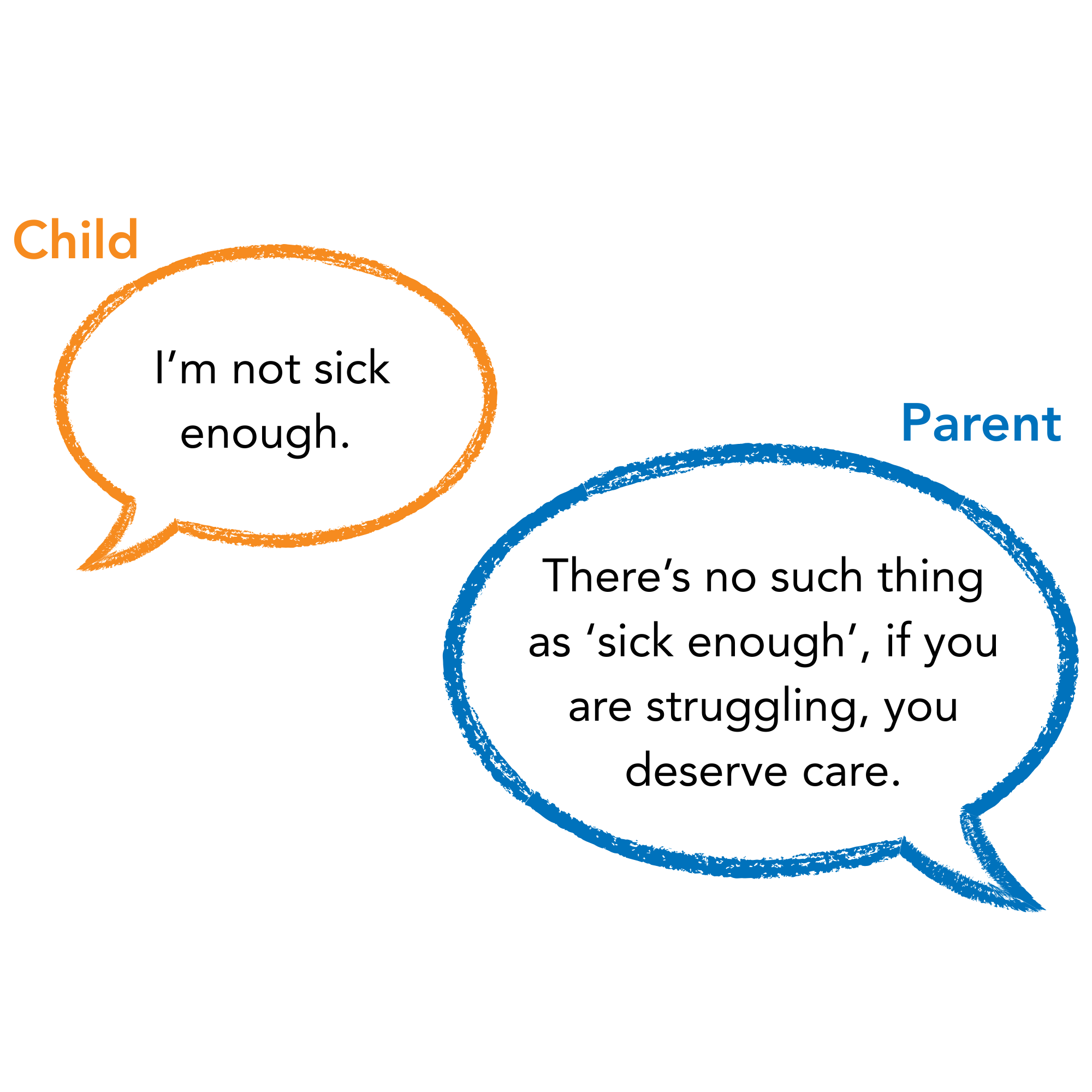
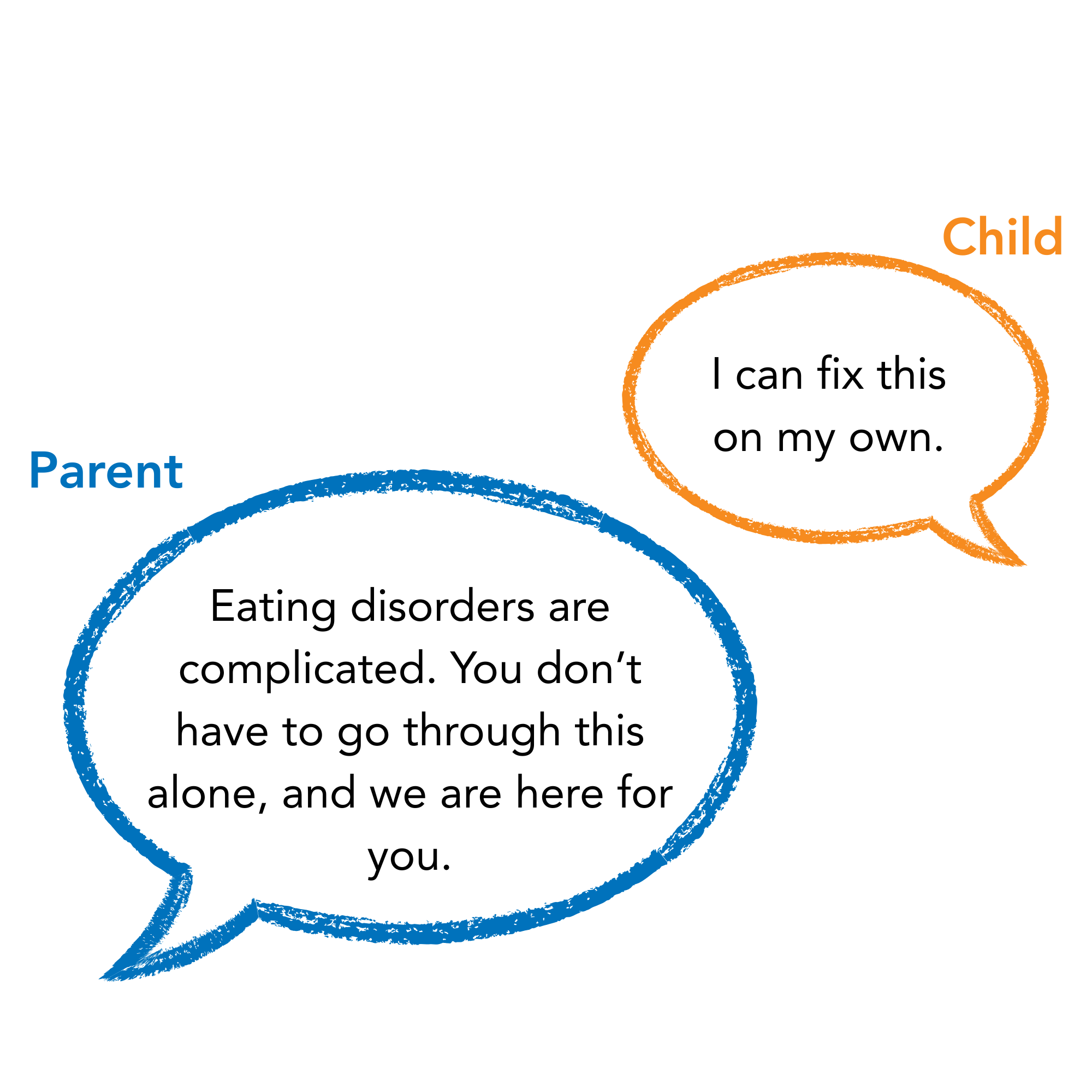
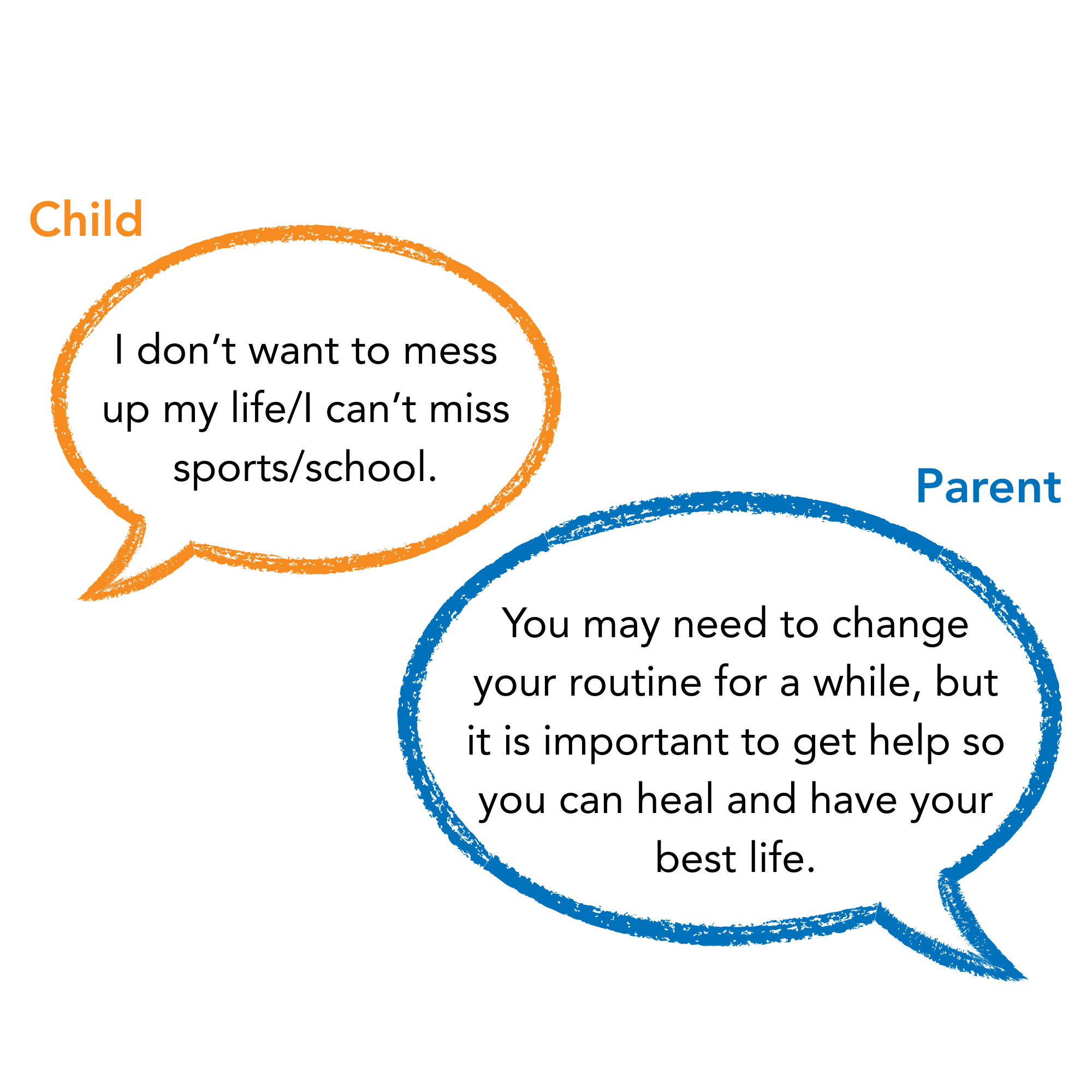
It can be hard to truly understand what your child is going through when they have disordered eating or an eating disorder. You may feel worried, confused, or unsure of how to help. But your love, patience, and support can make a big difference in their healing journey. They will feel less alone if you let them know that you are there for them. You are in the best place to support your child even if you’re unsure of next steps, or if your child doesn’t think they need help.
It can be hard to know where to start. As a parent or caregiver, a great first step would be learning more about:
You can work together with health professionals to create a care plan that includes both a deep understanding of your child and the right medical support for them.
It’s important to remember:
- Your child did not choose to become unwell.
- They may be struggling with their mental health or an aspect of their life.
- They are not trying to create worry or hardship for you or your family.
- Trying to understand the worries and fears your child has about food and their body doesn’t mean that you agree with these fears.
Let your child know you believe them, and that you are there to support them.
At first, an eating disorder may seem to help a young person feel better. They may feel more able to manage their anxiety, or cope with other stresses in their life. Some youth describe their eating disorder as a strong, critical “voice” inside - not a hallucination - but a constant pressure that feels real and overwhelming. This can be very frightening for them, especially in our world that often rewards weight loss and promotes body ideals that are unrealistic.