We’re hardwired to notice when our child suffers or feels pain. It hurts when our child is not okay.
It is also hard when we fall short of our own parenting standards. The stakes are high.
Imagine the last time you were not the parent that you want to be... maybe you yelled at your child as a response to their tantrum - and you deeply regret your words. Maybe you had a hectic morning and dropped them off late for school – and you feel guilty.
It is easy to blame and criticize ourselves during moments like these. This reaction can make things worse.
We can respond another way.
Responding with self or inner compassion
We can practice bringing compassion, instead of criticism or blame to these difficult moments.
Self-compassion does not mean just “being nice” to ourselves. It is an intentional response, and a loving act or attitude. When we act with self-compassion, we treat ourselves with the same respect and kindness we would offer a loved one who is struggling or experiencing a difficult time.
It can help to imagine how you would respond to a good friend or family member who is struggling:
What would you say?
What support might you offer?
What would you be careful NOT to say or do?
Self-compassion doesn't come easily, and don’t be surprised if you feel uncomfortable at first. Many of us struggle to offer this quality of kindness to ourselves. Self-compassion takes practice - so be patient with yourself!
Children also benefit when we model kindness and self-compassion. Our example teaches them how to be kind and forgiving towards themselves.
Compassion can be strong and fierce
Compassion is not only tender, but also strong. We can combine the energy of love and care for ourselves, with the energy of courage and bravery.
As self-compassion researcher Kristin Neff describes, “fierce self-compassion is like Momma Bear who ferociously protects her cubs when threatened, or catches fish to feed them, or moves them to a new territory with better resources.”
It is often easier to be compassionate towards others than it is towards ourselves. We can learn from our bear instincts and turn this fierce energy inward to stand up for ourselves.
When we practice fierce self-compassion by setting boundaries and taking time for our own needs, this can help us to stay well and build resilience.
Practicing self-compassion
This practice can take less than one minute, and includes the three components of self-compassion (self-kindness, common humanity, mindfulness) described by Kristin Neff. Neff has used this practice herself in difficult moments, like when her young son had a major meltdown during a flight.
When you face a stressful or painful situation as a parent, try these simple steps:
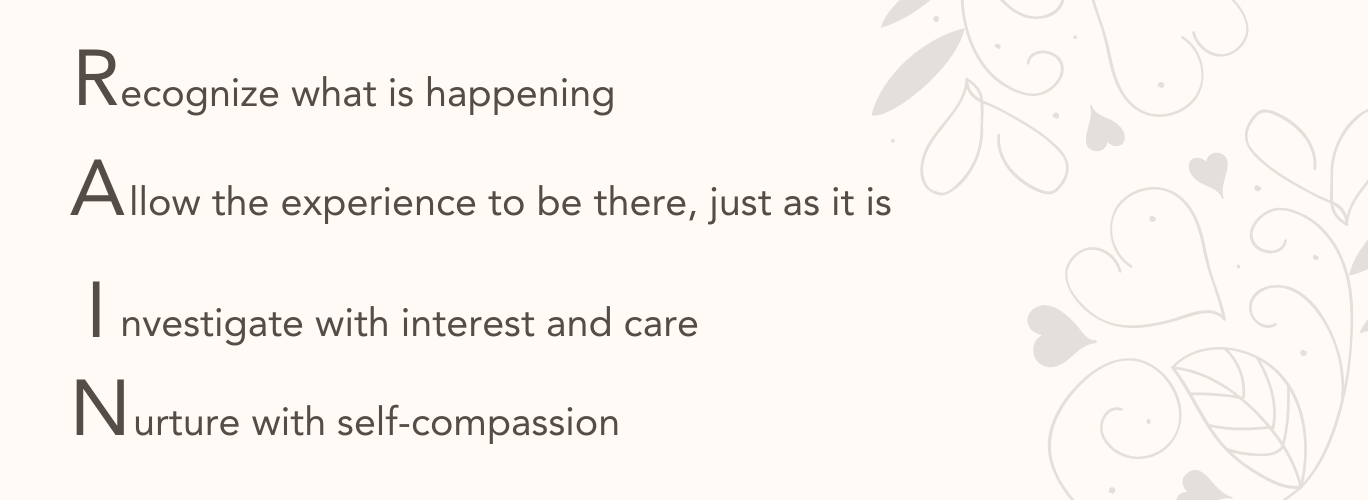
Name it. Accept the moment of suffering with a statement like, “this hurts,” or “this is hard.”
Remember your common humanity. Acknowledge that other parents have felt this way too – “I’m not alone in this,” or “everyone is struggling right now. This is hard on all of us.”
End with kindness. Offer yourself kindness by saying something like, “May I forgive myself,” or “This is hard, but it’s going to be okay. I’ve got this.” Tell yourself what you would tell a dear friend in the same situation.
This question helps you find what self-compassion means in this moment. You may need a half-hour alone to recharge, or to hide in the bathroom for a quick break. You might need a reassuring conversation with a friend. Or, you might need to finish a task that you have put off, that is causing you stress. It’s important to consider your own needs as much as those of your child.
“Taking care of yourself doesn’t mean ‘me first,’ it means ‘me too'.”
~ L.R. Knost
Physical touch can be another way to show yourself compassion
Try resting your hand over your heart, as a gesture of comfort toward yourself. Or, give yourself a hug. The body responds to touch – it calms the nervous system.
Think of something that went well today
Instead of fixating on what went wrong or your perceived failures, focus on all the small things that went well during the day. You might surprise yourself! We tend to dwell on negative experiences, which can overshadow positive moments.
Bring mindful awareness to your body and breath
You can try this anytime – like before bed, when you finally have a moment to yourself. If thoughts flood your mind, remind yourself that you’ve done enough. Let the thoughts go.
Remember: the smallest act of self-kindness can transform a difficult experience.
Even holding an intention to bring awareness and kindness to our experience is an act of compassion.
Join our Kelty Newsletter and stay connected
Get the latest on resources, news and upcoming events.
Where You Are Podcast
Through real stories, expertise, and practical tips, this podcast helps families promote their mental health and wellness, navigating important topics to meet you where you are in your journey.
Call 911 or go to your local hospital’s emergency room if you or anyone else’s safety is at risk and immediate help is needed.
If you or someone you know is thinking about ending their own life, or needs someone to talk to about suicidal thoughts or ideas:
Call 1-800-SUICIDE (1-800-784-2433) for the BC Suicide Prevention and Intervention Line. Available in over 140 languages using a language service.
Call 1-800-588-8717 for the BC KUU-US Indigenous Crisis and Support Line.
Call or text 988 for the National Suicide Crisis Helpline. Available in English and French.
For mental health or substance use crisis support:
Call 310-6789 for the BC Mental Health Support Line anytimefor emotional support, information and resources. Available in over 140 languages using a language service.