Body Image & Prevention

Introduction

Eating disorders aren’t always about weight or body image, they can be linked to many different thoughts, emotions and experiences. However, sometimes concerns about body image do play a big role. This section focuses on how body image can affect disordered eating and eating disorders, and ways to support a healthier relationship with the body.

Body image is not just about how we look. It is also how we feel about our bodies and how they fit into the world around us. Children and youth may hear mixed messages about body image. For example, they may notice:

  • How adults in their life talk about their own bodies and other people’s bodies
  • How people talk about their body weight, shape or size
  • What they see on different forms of media

Body image issues can develop at any age. Children who may be at risk for eating disorders might pick up on comments about their bodies from people in their lives including their familyat school, peers, and the media. These comments may share children’s beliefs about the “ideal” body. A poor body image can make them feel anxious, self-conscious, and isolated. It can impact a child's ability to enjoy life and form close relationships.

Body Image Spectrum

It can be useful to think about body image and eating behaviours as if they are on a spectrum or continuum. The table below may help you understand where your child is on the continuum. 
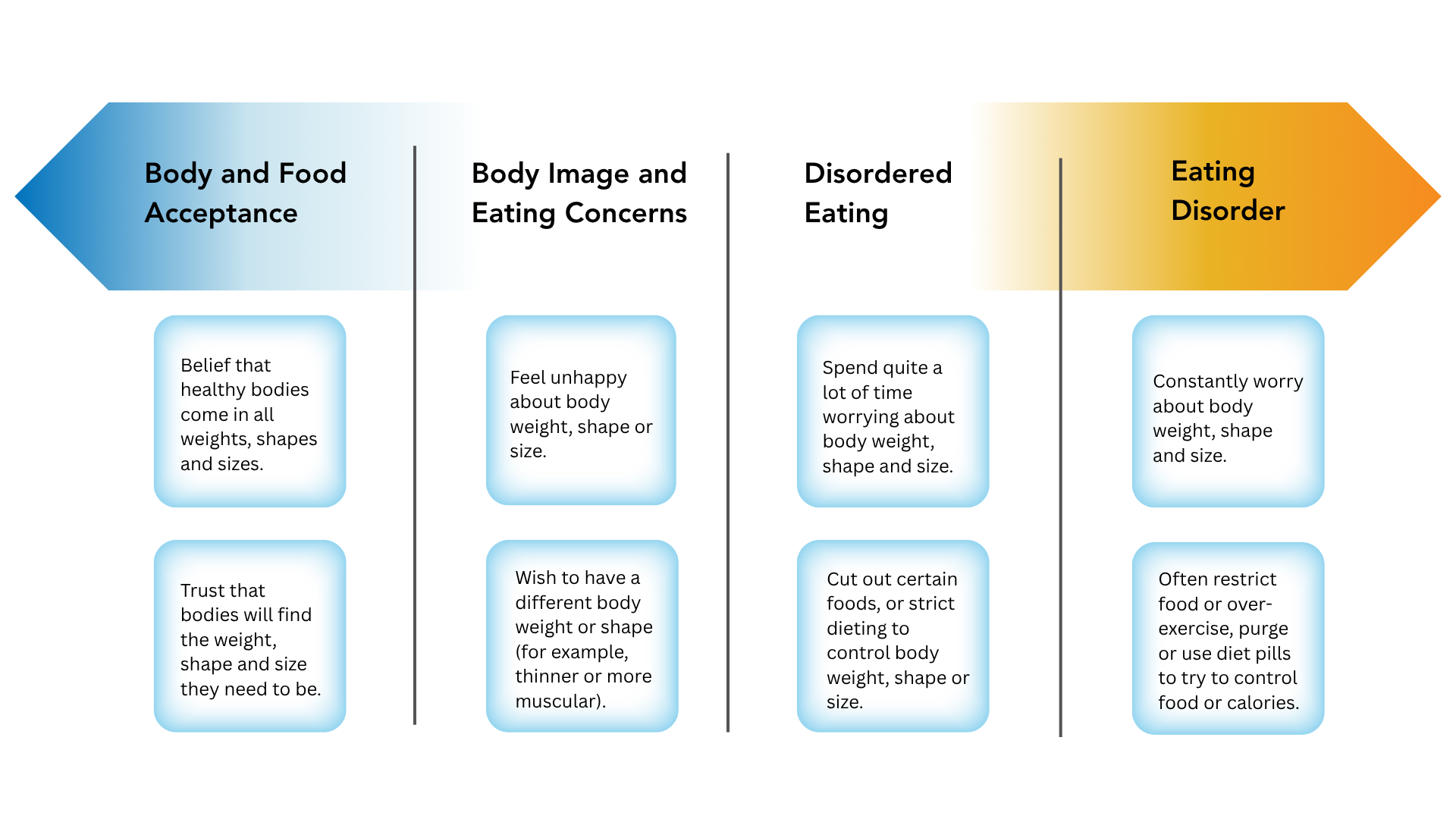
body image spectrum

This infographic was adapted from content written by BC Children’s Hospital for the foundrybc.ca website.  The continuum was adapted from an original provided by the University of Arizona Campus Health Services (Smiley/ King/ Avey, 1997). 


Positive Body Image

A positive body image means that you are happy in your body. You know that your worth and identity are not based on your body weight, shape or size. The image below may help you understand how positive body image and self-esteem affect your mental health:
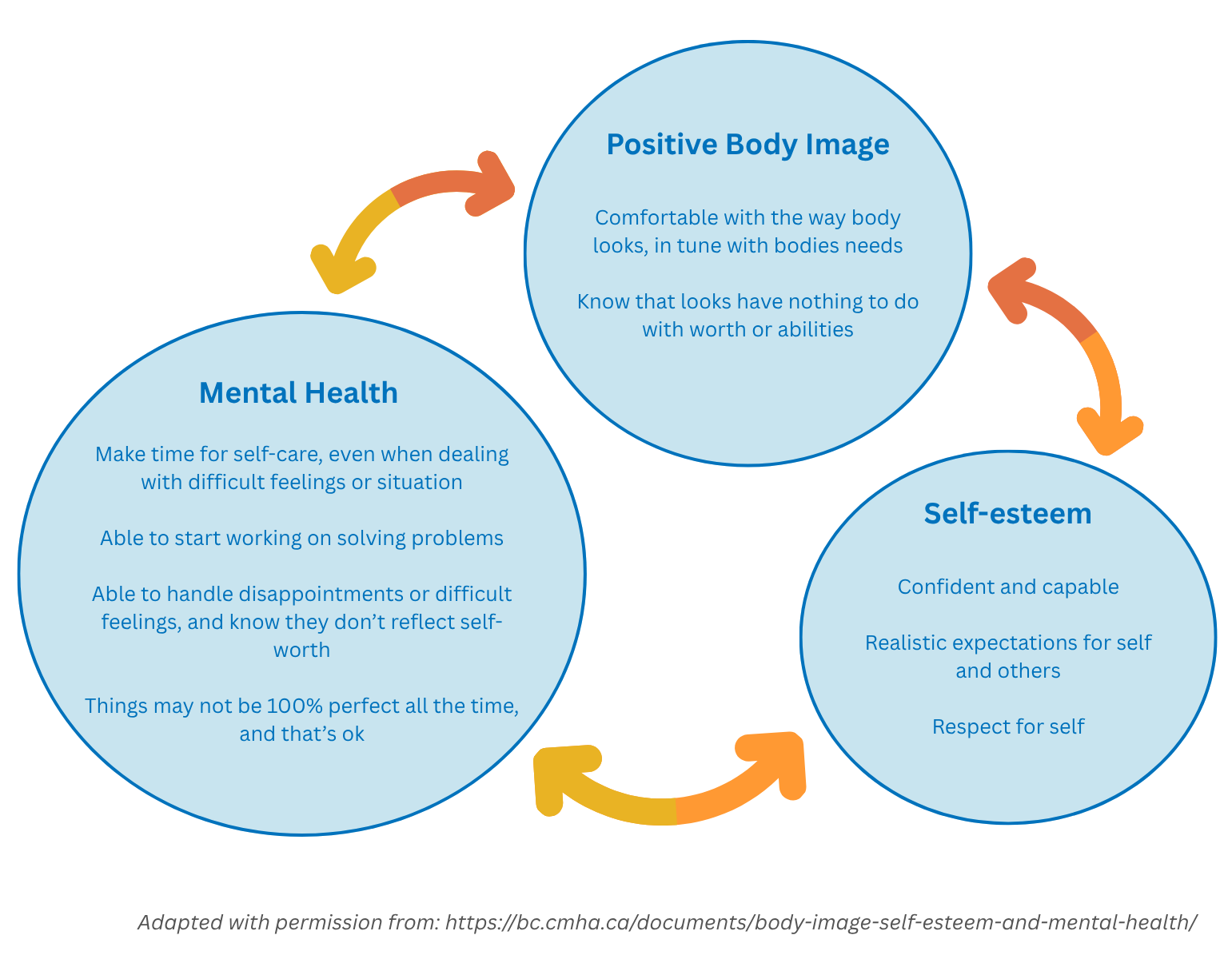
positive body image

Negative Body Image

A negative body image is when someone is not happy with their body shape, weight, size or features. A child or youth may compare themselves to others and feel like they are ‘less than’ others. They may also be unhappy with how their clothes are fitting them. Negative body image may be linked to low self-esteem and youth may feel that changing how they look on the outside will help them feel better on the inside. 
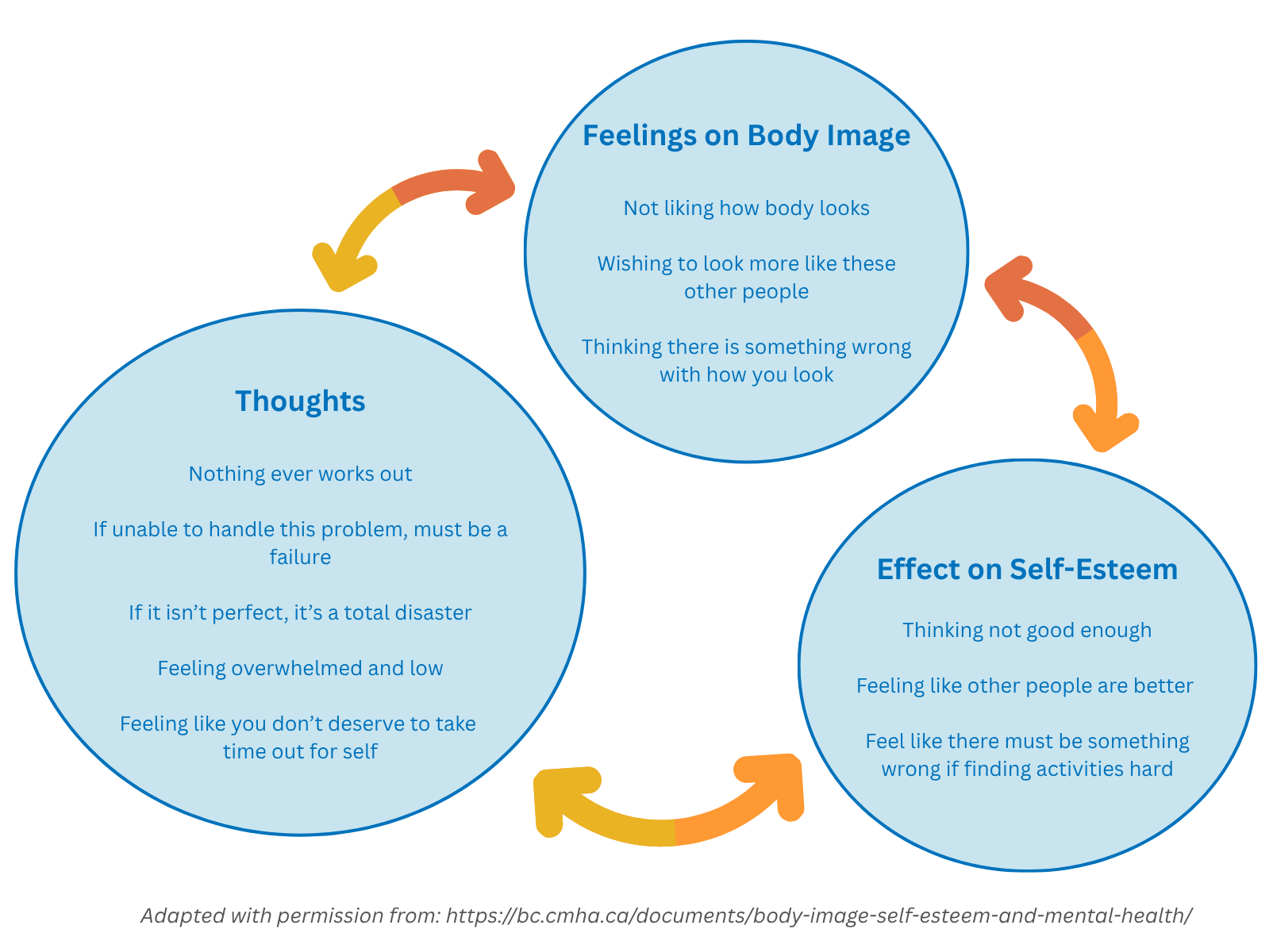
negative body image

Some signs of negative body image include: 

  • Avoiding situations where their body is exposed (for example: swimming)
  • Checking body parts often (for example: looking in the mirror more than normal, pinching skin, measuring body parts)
  • Spending more time than usual on changing appearances (for example: outfits, hair or other grooming)
  • Comparing themselves to others 
  • Seeking validation from others about their body shape or size
  • Wishing they had a different body weight, shape, size, or feature
  • Saying negative things about their body

Some of the experiences above may lead youth to change their food intake to manage their feelings or situation. Ways that may be protective against eating disorders could include:

  • Practice self care activities that do not focus on body image. 
  • Be part of a family or community that is inclusive of all body shapes and sizes.
  • Address family members’ comments about weight and the boundaries your family has set. 
  • Be aware of social influences and social media.
  • Find positive ways to celebrate the things our bodies can help us do.
  • Eat regular meals where possible with family, community or friends.

Parents own relationship with body (modeling)

Parents and caregivers may have grown up with their own beliefs and biases based on their culture at the time. To help children and youth create a positive body image, it can be helpful to examine beliefs around food, dieting, exercise, and ‘ideal body image’. Consider how bodies are talked about and how to support children and youth to value diverse shapes and sizes, and value aspects other than appearance.

Try to talk about how the clothes make you feel rather than how they make you look:

  • “This suit makes me feel powerful”.
  • “These shorts make me feel ready for summer”. 

Remember that clothes are made to fit us, we are not made to fit the clothes. 

The importance of how we talk about our bodies

Children and youth build their view of body image based on what they see and hear around them. When a parent or caregiver talks in a healthy way about body shape and size, it helps children to accept their body, build self-esteem and develop positive mental health. 

  • Some children may be sensitive to comments about weight, shape or other physical appearances. Even when someone may not feel confident about their body, there can be ways to talk in a positive way. For example, talking about how you appreciate that your body can move and helps you to enjoy your life (for example; walking, playing, socializing).
  • Be mindful of how you talk about other people’s bodies, either online or in person. Try to refrain from commenting on how others look and focus on other traits instead. For example:
    • “Look how kind she is”.
    • “That child is so brave for trying something new”. 
    • “They look so happy doing that activity”.

There are some experiences or stages of development that may change a youth’s body shape, size or features as they develop, or how they view these things. For example,

  • Being bullied or teased can be a very hurtful and serious experience for youth. This may be associated with wanting to change how they look in order to fit in. 
  • Changes to diets or food preferences can affect what a youth eats including cultural fasts, food as medicine, ethical changes (like becoming vegetarian), access to food or food costs. 
  • Cultural expectations may make some youth feel like they must fit a certain image. There could be pressures to be smaller, bigger or have certain facial hair and skin colour.
  • Medication can cause increased or decreased appetite which may cause weight change (gain or loss). 
  • Puberty can cause a lot of natural changes including weight, shape, size, hair growth and voice changes. This can be a big change for youth. It may take some time to get used to the changes. It can also be difficult if peers are going through changes at different times (earlier or later).
  • Sports or activities may affect your child’s body weight, shape or size naturally. They may also feel pressure to be lighter, heavier, bigger or smaller. 

Helpful strategies for a supportive home environment 

Youth can benefit from learning strategies to manage stress and other emotions if they are struggling with thoughts about food and body image. For example:

  • Deep breathing exercises (try out the Breathr app)
  • Activities to move their body with adaptations to support movement across all abilities
  • Write in a journal can help to process thoughts and emotions
  • Do something creative like painting, drawing, music or poetry
  • Focus on interests and strengths that are non-physical (for example: reading, playing a musical instrument, volunteering, playing board games)
  • Try a new hobby in a setting where you can meet new people

Influences

Media and social media

Children and youth use media and social media in many different ways. They may watch a tv show, go to a movie, read a magazine or see an ad on a billboard. They may also visit popular social media sites. One of the best ways to help keep your child safe is to learn the technology yourself. There are many resources for parents and caregivers that can help you understand how children and youth are using social media. They can suggest ways to decrease your child’s negative experiences.

School and peers

Peer pressure is not something new, but it is very real. Youth can feel pressure to fit in at school, in their society or in any group that they may be a part of. This may be because the group engages in certain behaviour together or may be because the group expects that every member is similar. 

Some youth fall into the ‘comparison trap’ where they compare themselves to their peers or to people on social media. It can distract them from other areas of their life including schoolwork, friendships and hobbies. If your child is around other youth who accept each other as they are, they may focus less on their body type and more on other qualities.

Notice and learn more about who your child spends time with. You might say: 

  • “Tell me more about your friends and why you like them”.
  • “Do you feel like you can be yourself around your friends?”
  • “How do your friends treat other people?”

Consider reaching out to your school’s principal or counsellor to ask about their policies on bullying, social media and eating disorders awareness in their school. Not sure where to start? Check out this resource on creating a school community where every body belongs.

As a parent or caregiver, you can continue to focus on other qualities that your child and their friends may have. You can celebrate diversity and ability without focusing on body weight, shape or size. You could encourage them to partake in activities that have supportive environments with a diverse range of friends. Above all, you can listen to your child and respect their opinions and insights.

Foundry BC

Body Image, Disordered Eating & Eating Disorders

Information on body image, disordered eating and eating disorders for youth and young adults. In this section you will find information, support and resources to help your child develop a better relationship with their body, no matter where they are on their journey.

Our Kids Health x Kelty Centre

Talking About Eating Disorders: Tips for Parents & Caregivers

Multi-language resource

If you are worried that your child may have an eating disorder, it’s important to talk to them. Starting these conversations isn’t always easy, but your presence and willingness to listen without judgement make a huge difference.

Where You Are Podcast

Through real stories, expertise, and practical tips, this podcast helps families promote their mental health and wellness, navigating important topics to meet you where you are in your journey.