Supporting your child when they have concerns with eating may seem overwhelming at times. There are resources and supports available for you and your child. Getting help early can give your child the best chance to recover and go on to have a happy, fulfilling life. The same is true if your child is diagnosed with another mental health disorder. If you have concerns about your child’s health, it is important to start the conversation. It is never too late, or too soon, to start.
A first step is to talk to a primary care provider about your concerns. Ask for a medical evaluation and assessment for eating-related concerns. It is important to work with care providers to find the right treatment, at the right time, for your child and family. You may find this guide helpful when meeting with healthcare professionals.
There are a range of services available for youth with eating disorders. The health care team will work with parents or caregivers and the youth to find the best plan for your family. Programs include medical, psychiatric, nutritional, psychosocial and other areas of care. Most of the programs for children and youth include parents and other caregivers in the treatment. It can be very helpful for family to be involved in supporting recovery.
Medical Treatment
- Those with eating disorders need to see a physician or primary care provider in-person on a regular basis. The primary care provider can watch for and treat any physical problems that are a result of their illness. They will also check for signs of medical concerns where a youth may need to go to hospital.
Medications
- The treatment plan for eating disorders may includes medications. They are usually offered in addition to psychotherapy. Some medications are given on a short-term basis to support the distress with making changes to eating.
Nutritional Counselling
- A key part of recovery is:
- Improving nutrition
- Developing healthy eating and exercise habits
- Changing harmful behaviors
- The treatment plan for eating disorders often includes support around nutrition and meal planning. This is part of the evidence-based therapies fore eating disorders. In some programs, dietitians who specialize in eating disorders may also meet with families.
Outpatient and Inpatient Treatment:
There are different options for levels of care for eating disorders treatment, based what on your healthcare providers recommend and the needs of your child and family. Some levels of care may be more appropriate for certain age groups (for example: older youth), while others may include focused supports for caregivers.
The Stepped Care approach is one possibility for treatment. It is based on the needs of each child, and their caregivers. Treatment would start on the step that is expected to be the most effective. It’s important to note that the steps may not be in order for your child, and they may go back and forth between steps.
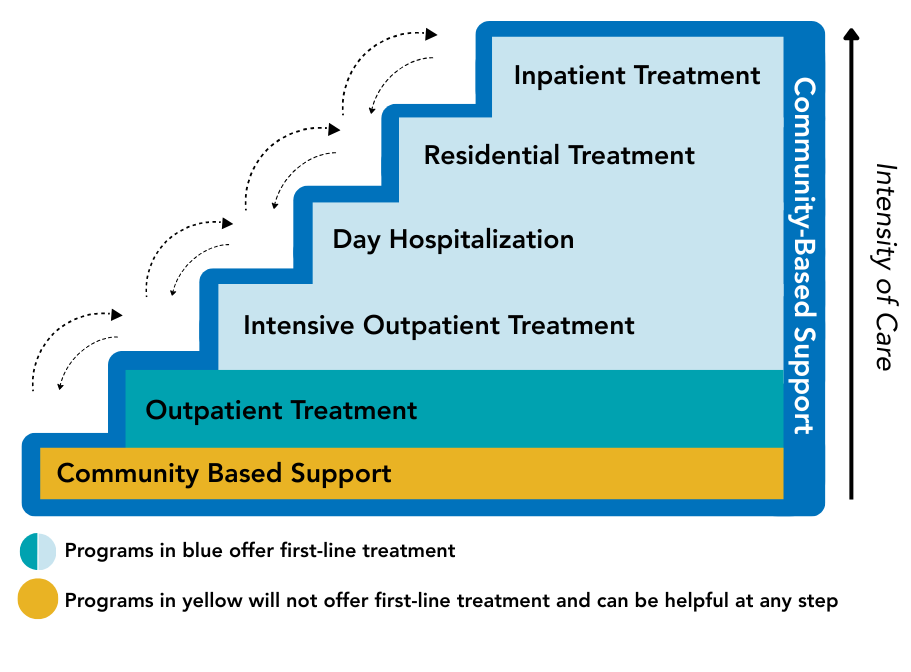
*Adapted with permission from Body Brave https://www.bodybrave.ca/*
Outpatient services may include:
- Medical Appointments
- Family-based treatment or other therapy approaches
- A team of specialists working together
If your child needs extra help or isn’t making the progress hoped for in outpatient care, there are other supportive options available. Healthcare providers will aim to provide the least intensive level of care for your child. You can find out more about these treatments at the BC Children’s Hospital website here.