All Resources
App or Online Tool

Rolling with ADHD for Parents & Caregivers
An eight module series that covers practical tools and strategies for caregivers of children with ADHD. This series has been adapted from the long standing program at BC Children’s, and includes what research show really works for kids and families living with ADHD.
MindShift CBT
Mindshift CBT is a free app designed to empower individuals in managing anxiety through evidence-based CBT strategies. Whether you are dealing with stress, social anxiety or panic, the app offers tools and resources tailored to your needs.

Walking Alongside Youth (WAY) with Depression: An online learning resource for parents and caregivers
WAY Depression is an online learning resource developed for BC parents, families and care providers to help build their capacity to support children and youth experiencing mild to moderate depression.
Books
How to Raise a Healthy Gamer: End Power Struggles, Break Bad Screen Habits, and Transform Your Relationship with Your Kids
A former gamer and Harvard-trained psychiatrist offers a proven, tested plan to help parents define, set, and reinforce healthy boundaries around video games and help kids who have developed an addiction to gaming.

When Your Teen Has an Eating Disorder: Practical strategies to help your teen recover from anorexia, bulimia and binge eating
This book will empower you to help your teen using a unique, family-based treatment (FBT) approach. With this guide, you'll learn to respectfully and lovingly oversee your teen's nutritional rehabilitation.

Help Your Teenager Beat an Eating Disorders
This book will help you understand what you need to know about eating disorders, which treatments work, and why it is absolutely essential to play an active role in your teen's recovery.
Kelty's Webinars
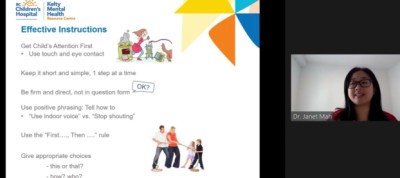
Parenting Challenging Behaviours in Children: Webinar
Dr. Janet Mah shares parenting strategies and resources to help you manage your child's behavioural challenges.

ADHD: Webinar Series (2025)
Webinar recordings from ADHD Parent Education Day, hosted alongside the BCCH ADHD Clinic. Topics include the basics of ADHD, evidence based treatment options, self-regulation tools, tips on parenting a child with ADHD, and how to help a child with ADHD at school (November 2025).

Webinar Recording: Language Matters! Introducing a New Resource for Families on Mental Health and Substance Use
In this webinar, we introduce Language Matters! Understanding Mental Health and Substance Use: A Resource for Families and School Communities
Medication Sheets

Antidepressant Monitoring Form
A form used to monitor response and side effects with antidepressant medications.
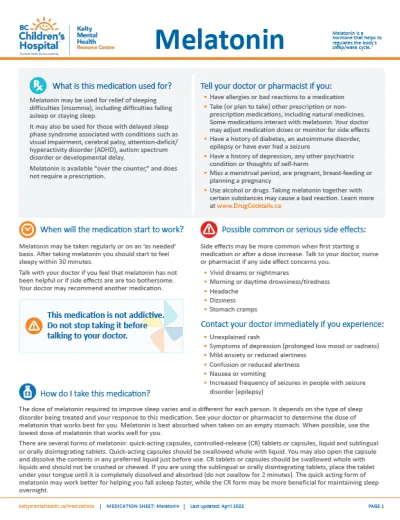
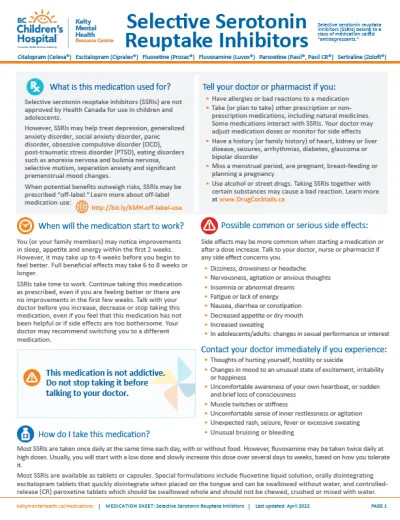
Selective Serotonin Reuptake Inhibitors (SSRIs)
Selective Serotonin Reuptake Inhibitors (SSRIs) are antidepressant, anti-anxiety and anti-OCD medications.
PDFs
Safety in the Home Guide
Keep your child or youth safe during times of crisis with the Safety in the Home guide — a practical resource designed to help families create safer environments and stronger support plans.

Disorders of Gut-Brain Interactions: Functional Abdominal Pain Handbook
A handbook for children and their parents and caregivers on functional abdominal pain (FAP). It covers what FAP is, what causes it, how the gut, brain and pain is connected, and more.
Screen for Disordered Eating
Issues with food and body image can be overwhelming and confusing. By answering some questions, this screening tool tells you if you’re at risk and if you should speak with a professional.
Podcasts and Audio
Support Service
FEAST 30 Days
Caring for someone with an eating disorder comes with a steep learning curve and questions that keep coming. FEAST 30 Days breaks it down — one lesson a day, straight to your inbox, written by people who've been where you are.
Body Brave
Body Brave is a community-based charitable organization offering virtual support to those impacted by eating disorders and disordered eating.
Sibling Supports
BC Children’s Hospital has a dedicated Sibling Centre that provides safe, short-term sibling support that offer services in-person and online.
Videos

How To Talk To Your Child When ED Has You Walking on Eggshells
In this presentation, Dr. Parks will help us to understand WHY it is difficult communicating through an eating disorder and give specific TOOLS to help you as you navigate towards recovery.

Eating Disorders: Beyond the Myths
The NEDIC team discusses myths, facts and false stereotypes surrounding eating disorders. Call 1-866-NEDIC-20 or visit us on www.nedic.ca for more information!

ADHD and Mindfulness: Webinar Recording
This webinar on Mindfulness and ADHD focuses on what mindfulness is and isn’t, considers how mindfulness and compassion can support the ADHD journey, and explores how to discover more mindful moments in your day.
Websites
Complete Guide to PANS and PANDAS
How to recognize these forms of severe, acute-onset OCD, how they are diagnosed, and the recommended treatments.
Talking to your teenagers about drugs, alcohol and vaping
Learn how to talk to kids and teens about substance use and support them in making safe choices.
National Eating Disorder Information Centre (NEDIC)
NEDIC is Canada’s source for eating disorder education and support. They guide people to trustworthy information and resources relevant to their situation.